
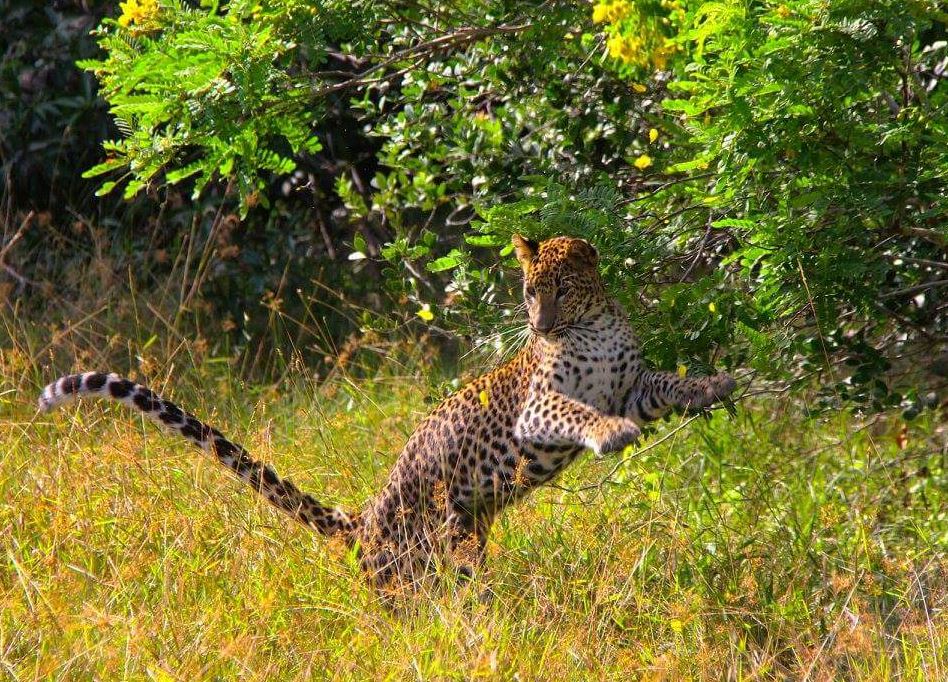
Wilpattu Leopard Diary make every safari in Wilpattu National Park is different. Some days bring unforgettable leopard encounters, while on other days we may only find tracks, paw prints, scrape marks, or a fleeting glimpse disappearing into the forest.
Our Wilpattu Leopard Diary records memorable leopard sightings, interesting wildlife encounters, and observations from safaris inside Sri Lanka’s largest national park.
Book Wilpattu Safari Tickets – Instant confirmation via WhatsApp
⭐ Rated 4.9 by 1200+ travelers | ✔ Instant WhatsApp booking | ✔ Free cancellation*
Wilpattu Leopard Diary
Wilpattu is one of the most exciting places in Sri Lanka to search for the Sri Lankan leopard. The park’s dense forest, open grasslands, rocky areas, and numerous natural lakes create a unique habitat for these magnificent predators.
This diary is about more than simply counting leopards. It is about understanding their behaviour, learning their territories, and documenting the special moments that make a Wilpattu safari unforgettable.
This diary is about more than simply counting leopards. It is about understanding their behaviour, learning their territories, and documenting the special moments that make a Wilpattu safari unforgettable.
Why Wilpattu Is Special for Leopards
Wilpattu National Park offers a very different wildlife experience from many other parks in Sri Lanka. Its landscape is a mixture of dry-zone forest, open areas, scrubland, and natural lakes known as villus.
These water bodies attract deer, wild boar, buffalo, elephants, birds, and many other animals. Where there is abundant prey, there is also an opportunity to encounter predators such as the Sri Lankan leopard.
Leopards can often be seen resting on rocks, lying beneath trees, walking along forest tracks, or carefully observing their surroundings from the edge of a villu.
However, leopard sightings are never guaranteed. They are wild and elusive animals, and finding one requires patience, experience, and a little luck.
Leopard Diary Entries
🐆 Leopard Sighting – Early Morning Encounter
The early morning is one of the most exciting times to search for leopards in Wilpattu.
As the first light enters the forest, safari tracks remain quiet and cool. Our eyes scan the road edges, rocks, trees, and open areas around the villus.
On a successful morning, a leopard may appear suddenly beside the track, walking confidently through the forest before disappearing into the vegetation.
These brief encounters can be incredibly special because every movement tells a story — the direction it is travelling, its body language, and whether it is searching for prey or simply moving between areas of its territory.
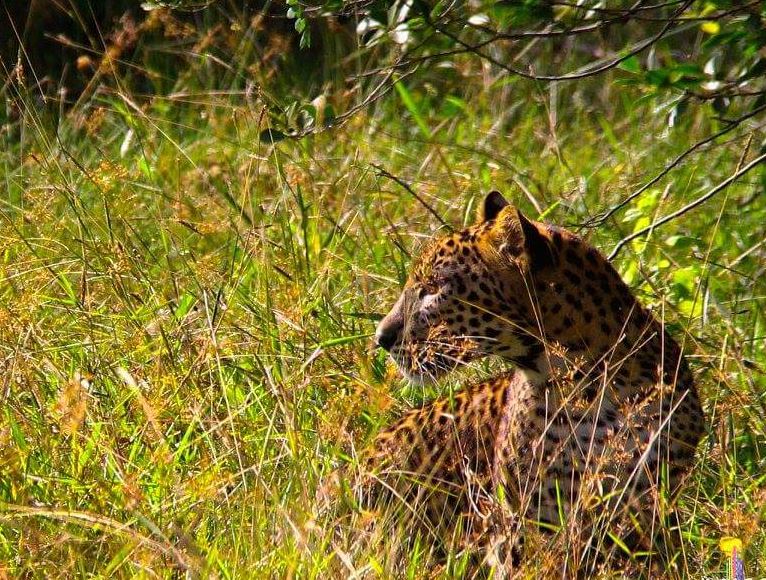
🐆 Leopard Resting Near a Villu
One of the classic Wilpattu leopard experiences is discovering a leopard resting close to a natural lake.
The leopard may lie quietly under the shade of a tree or on a rocky outcrop while deer and birds continue their activities nearby.
Sometimes the animal appears completely relaxed. At other times, its ears suddenly move and its eyes focus on something in the distance.
These quiet moments are often just as memorable as an active sighting.
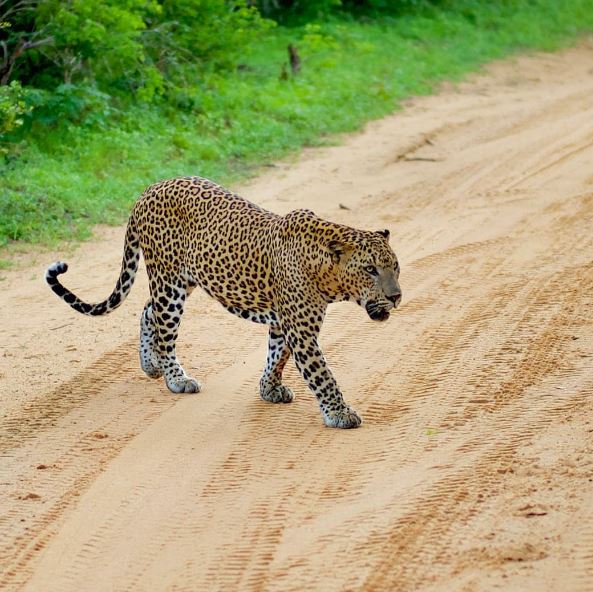
🐆 A Leopard Crossing the Safari Road
A leopard crossing the road can happen in just a few seconds.
You may be driving through the forest when the guide suddenly spots movement ahead. A leopard steps onto the track, pauses briefly, looks toward the vehicle, and then disappears into the forest.
There may only be a few moments to observe it, which is why keeping your attention on the surroundings is so important during a Wilpattu safari.
Understanding Wilpattu Leopards
The Sri Lankan leopard is a unique subspecies found only on the island.
Adult leopards are powerful predators and play an important role in maintaining the balance of the park’s ecosystem. They are highly adaptable animals and can live in a variety of habitats.
A leopard’s territory can cover a large area, meaning the same animal may not be seen in the same location every day.
This is one reason why experienced safari guides spend considerable time learning the park’s tracks, habitats, animal behaviour, and regularly used routes.
Safari Packages
Private Afternoon Wilpattu Safari Tour Itinerary
- 2.00 pm: Pick up from your hotel in the Wilpattu area and transfer to Wilpattu National Park for the safari.
- 2.30 pm: Begin your Afternoon Wilpattu Safari Tour. Explore Wilpattu’s beautiful forests, open grasslands, and natural villus (lakes). You may see Sri Lankan leopards, elephants, sloth bears, sambar deer, spotted deer, wild boar, monkeys, wild buffaloes, crocodiles, and many other animals. The park is also home to a wide variety of birds, including peacocks, eagles, pelicans, parrots, parakeets, owls, cranes, and many more. The afternoon hours are an excellent time for wildlife viewing and photography.
- 5.30 pm: End of the Safari.
- 6.00 pm: Drop back to your hotel.
Optional: If requested, we can arrange additional local experiences or activities in the surrounding area, depending on your location and available time.
NOTE: Safari and transfer times may change depending on traffic, weather conditions, wildlife conditions, and park entry procedures..
Children Rate – Half Rate
- Entrance ticket fee for Wilpattu National Park Safari Tour & Jeep: Per Person Cost Price (min 2 Person) – US$ 75 / EUR 72 / GBP 60) per foreign adult and US$ 40 / EUR 36 / GBP 30 per foreign child of age 03 – 12 years are applicable.
What is Included
- Free pick up and drop will be provided free of charge only to main entrance (within 4km) Wilpattu area hotels only.
- Private Jeep for your group and Professional Safari Driver
- Wilpattu Safari Tour Entrance Tickets
- All applicable taxes.
- Hotel Pick up and Drop Off near Wilpattu Park (within 4km)
Excluded
- Food & Drink
- Tips for Driver
Check Safari Availability on WhatsApp & Book Online